Short answer
Manti are filled wheat dumplings found from Central Asia to Turkey and the Caucasus. Uyghur and Uzbek manti are large and steamed, while Turkish manti are tiny, boiled or baked and served with yogurt.
Manti are filled wheat dumplings found across Central Asia, Turkey, the Caucasus and parts of the Middle East, usually stuffed with spiced minced meat and onion. The word covers a wide range of styles, from palm-sized steamed dumplings in Uyghur and Uzbek cooking to tiny boiled ones served with yogurt in Turkey. This guide explains the main types, the dough and fillings, how manti are folded and steamed, how they compare with similar dumplings, and whether they appear on the Bostan Uyghur Cuisine menu.
What are manti?
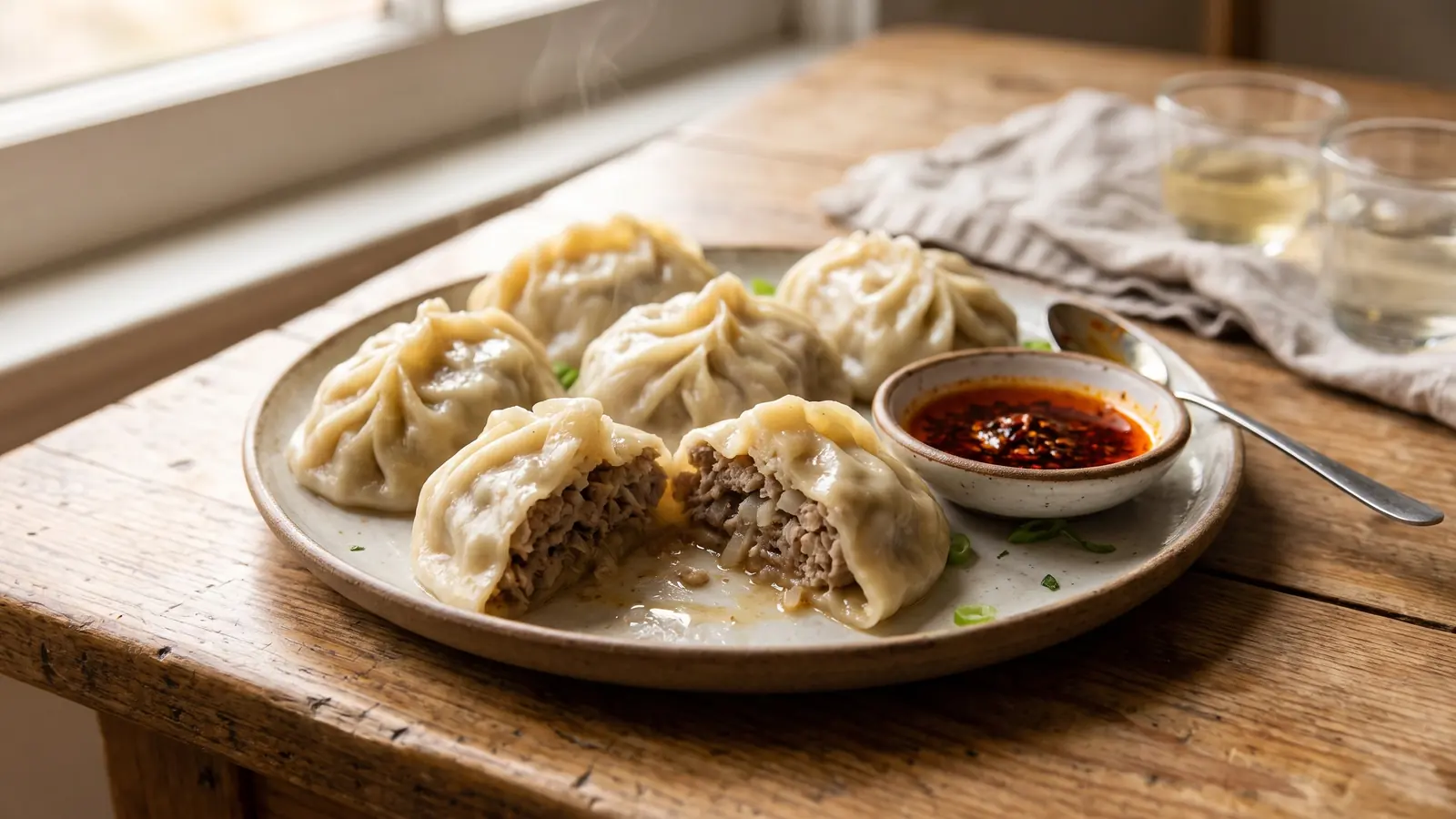
Manti are dumplings made from a plain wheat dough wrapped around a filling, then cooked in steam or water. The dough has no yeast, and the filling is traditionally seasoned meat and onion.
They are one of the shared dishes of the Turkic world, and the name, with spelling variants such as mantu and manty, shows up in several languages. Because many peoples cook them, the details differ from place to place: the size, the shape, the filling and the sauce all change.
In English, the word is often applied to two quite different dishes. One is the large Central Asian dumpling, the other is the small Turkish dumpling. Knowing which one a menu means helps you know what to expect.
Does Bostan Uyghur Cuisine serve manti?
Manti are not listed on the Bostan Uyghur Cuisine online ordering page as of November 2026. The page lists samsa pastries, goshnan, noodle dishes and kababs, but no steamed dumplings under that name.
That does not rule out a special or a dish served only in the dining room, and the ordering page may not show everything. If you want manti, call (703) 527-2026 to ask. The closest items on the ordering page are Samsa 2pc, two oven-baked buns of minced beef and onion at $8.99, and Goshnan, a stuffed flatbread at $12.25, which share the minced meat and onion idea but are baked rather than steamed.
How do Uyghur and Uzbek manti differ from Turkish manti?
Uyghur and Uzbek manti are large steamed dumplings, usually served a few at a time, while Turkish manti are tiny and served in a sauce. The dough and basic idea are the same, but the scale and the service are very different.
| Feature | Uyghur and Uzbek manti | Turkish manti |
|---|---|---|
| Size | Large, often palm-sized | Very small, often a small fraction of that |
| Cooking | Steamed in tiers | Boiled or baked |
| Filling | Lamb or beef with onion, or pumpkin | Spiced minced meat and onion |
| Served with | Vinegar, chili sauce or sour cream | Garlic yogurt and spiced butter |
| Eaten as | A main dish, a few at a time | A main dish in a bowl |
The Turkish version is closely linked with central Anatolia, and the city of Kayseri is often named for its very small manti. Cooks there pride themselves on the tiny size. In Central Asia, size is less of a competition, and manti are made large enough to hold juices.
What is the dough made from?
Manti dough is made from wheat flour, water and salt, kneaded firm and rested before it is rolled thin. Some cooks add an egg, but a plain dough is common.
The dough has to be strong enough to hold juicy meat without tearing. It is rolled into thin sheets and cut into squares or rounds. Thin dough gives a delicate wrapper, while thicker dough survives steaming better and gives more chew.
Use flour with enough protein to make a firm dough, and rest it long enough that it rolls without shrinking back. These are the same rules as for laghman noodles, which start from a very similar dough.
What are the traditional manti fillings?
The classic filling is chopped or minced lamb or beef mixed with chopped onion, salt and black pepper. Pumpkin is the best-known alternative, especially in Central Asia.
Lamb with onion is the standard. In many recipes the meat is chopped by hand rather than ground, and a bit of fat is mixed in so the filling stays juicy. The onion releases liquid as the dumplings cook, which makes the inside moist.
- Meat and onion: lamb or beef, onion, salt, pepper. Cumin appears in some versions.
- Pumpkin: diced pumpkin with onion, sometimes with a little fat or sugar.
- Potato or herb versions: found in some regional kitchens, less common in restaurants.
Specific spice mixes vary from cook to cook, and there is no single authentic recipe.
How are manti folded and steamed?
Manti are folded by gathering the corners or edges of a piece of dough over the filling and pinching it shut. Different shapes are used, and the aim is the same: a sealed pouch that can hold juice.
For Central Asian manti, the common method is to place a spoonful of filling in the center of a square or round of dough, then bring the edges up and pleat or pinch them together. Some folds leave a small opening at the top. Others close completely.
The dumplings are then steamed in a multi-tiered steamer. In Russian-influenced kitchens this pot is known as a mantovarka, and in other places a similar tiered steamer is used. The tiers are oiled to stop the dumplings sticking, and the dumplings are placed so they do not touch.
Steaming time depends on size. Large manti take noticeably longer than small ones, and a cook usually tests by cutting one open to check that the filling is cooked through.
What sauces go with manti?
Sauce depends on the region. Central Asian manti usually come with vinegar, chili sauce or sour cream, and Turkish manti come with garlic yogurt and a drizzle of spiced butter.
| Region | Typical sauce | What it adds |
|---|---|---|
| Uyghur and Uzbek | Vinegar, chili oil or sour cream | Sharp or creamy contrast to rich meat |
| Turkish | Garlic yogurt, melted butter with red pepper | Cool and rich with a gentle heat |
| Caucasus | Sour cream or tomato-based sauce | Varies by cook |
Chili oil is a common add-on in the Uyghur table, and a separate guide on this site explains it. Vinegar cuts the fat of lamb well, so it is worth trying on the side even if you do not usually use it with dumplings.
Manti vs mandu vs momo: what is the difference?
Manti, mandu and momo are all filled dumplings, but they come from different regions with different fillings and sauces. Manti are Turkic and Central Asian, mandu are Korean, and momo are associated with Tibet and Nepal.
| Dumpling | Region | Typical filling | Usual cooking |
|---|---|---|---|
| Manti | Central Asia, Turkey, Caucasus | Spiced lamb or beef and onion | Steamed, boiled or baked |
| Mandu | Korea | Meat, tofu, kimchi, vegetables | Steamed, fried or boiled |
| Momo | Tibet, Nepal and neighbouring regions | Meat or vegetables with spices | Steamed or fried |
| Jiaozi | China | Beef, vegetables and others | Boiled, steamed or pan-fried |
The family resemblance is real, and food writers often discuss how filled dough spread along trade routes. The details of who borrowed from whom are debated, and no single account is settled.
What other names do manti go by?
Manti appear as mantu, manty, mantı and similar spellings, depending on the language and alphabet. The names are variants of one word, but the dishes behind them are not always identical.
Some kitchens use a different word for a similar dumpling, and some use manti for dishes that others would call something else. A menu in a Russian-speaking area may write manty, a Turkish menu writes mantı, and an English menu often writes manti. When the description is missing, ask how big the dumplings are and how they are cooked.
How do you eat large steamed manti?
Large manti are eaten with a fork or by hand, taking care with the juice inside. The filling releases hot liquid, so the first bite should be small.
A common approach is to bite a corner open, let steam escape and sip the juice, then eat the rest with a dab of sauce. Vinegar, chili oil or sour cream go on the plate beside the dumplings, not over them, so the wrapper does not go soggy. Eat them hot, since the dough firms as it cools and the fat in the filling sets.
For leftovers, steam them again for a few minutes rather than microwaving, which tends to leave the wrapper tough. Pan-frying cooled manti in a little oil is another option, and it gives a crisp base.
Can you make manti at home?
Yes. A home cook can make manti with a basic dough, a meat and onion filling and a steamer basket or a tiered steamer.
The steps are straightforward:
- Make and rest the dough.
- Mix the filling with chopped onion, salt and pepper.
- Roll the dough thin and cut it into squares or rounds.
- Fill, fold and seal each piece.
- Oil the steamer and steam until the filling is cooked through.
Freezing works well. Place the shaped dumplings on a tray so they do not touch, freeze until firm, then bag them. Steam from frozen and allow a few extra minutes. A cook should always check that meat fillings are cooked through before serving.
What should you look for in manti at a restaurant?
Look for a thin but intact wrapper, a juicy filling and a sauce that suits the style. These are signs of care in the kitchen.
The wrapper should not be pasty or torn. The filling should taste of meat and onion, not only salt. If a menu says manti, check the size and cooking method in the description, since a bowl of tiny boiled dumplings and a plate of large steamed ones are different meals.
If you want something similar at Bostan Uyghur Cuisine, the menu lists items such as Samsa 2pc at $8.99 and Goshnan at $12.25, on its online ordering page as of November 2026. See the menu page for the full list and call (703) 527-2026 to ask about anything not shown.
Common questions
Are manti and dumplings the same thing?
Manti are a kind of dumpling, but the term refers to a specific family of Turkic and Central Asian dumplings, usually filled with spiced meat and onion, rather than to dumplings in general.
Are manti boiled or steamed?
Central Asian manti are usually steamed in a tiered steamer. Turkish manti are usually boiled or baked, because they are tiny and served in a sauce.
What is the filling in manti?
Chopped or minced lamb or beef with onion is the classic filling. Pumpkin is a common vegetarian version in Central Asia.
What do you eat manti with?
Central Asian manti are often eaten with vinegar, chili sauce or sour cream, and Turkish manti come with garlic yogurt and spiced butter.
Can you freeze manti?
Yes. Freeze the uncooked dumplings spread out on a tray until firm, then bag them and cook from frozen, adding a few minutes to the steaming time.
Before you go, check the Bostan Uyghur Cuisine guide for the current hours and the menu.
This article is general information from an independent guide, not from Bostan Uyghur Cuisine itself. For the store’s current details see hours and location.